Recent Publications


Association and causal mediation between marital status and depression in seven countries

Xiaobing Zhai (翟小兵)

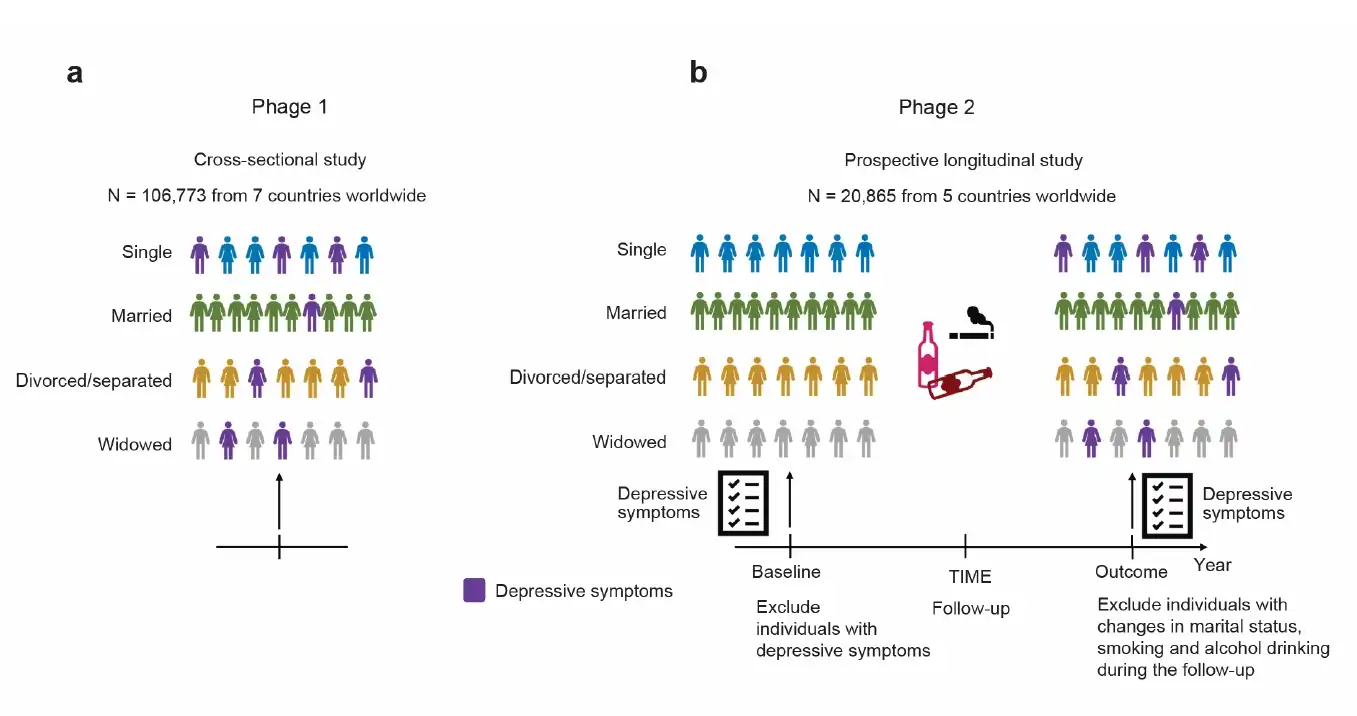
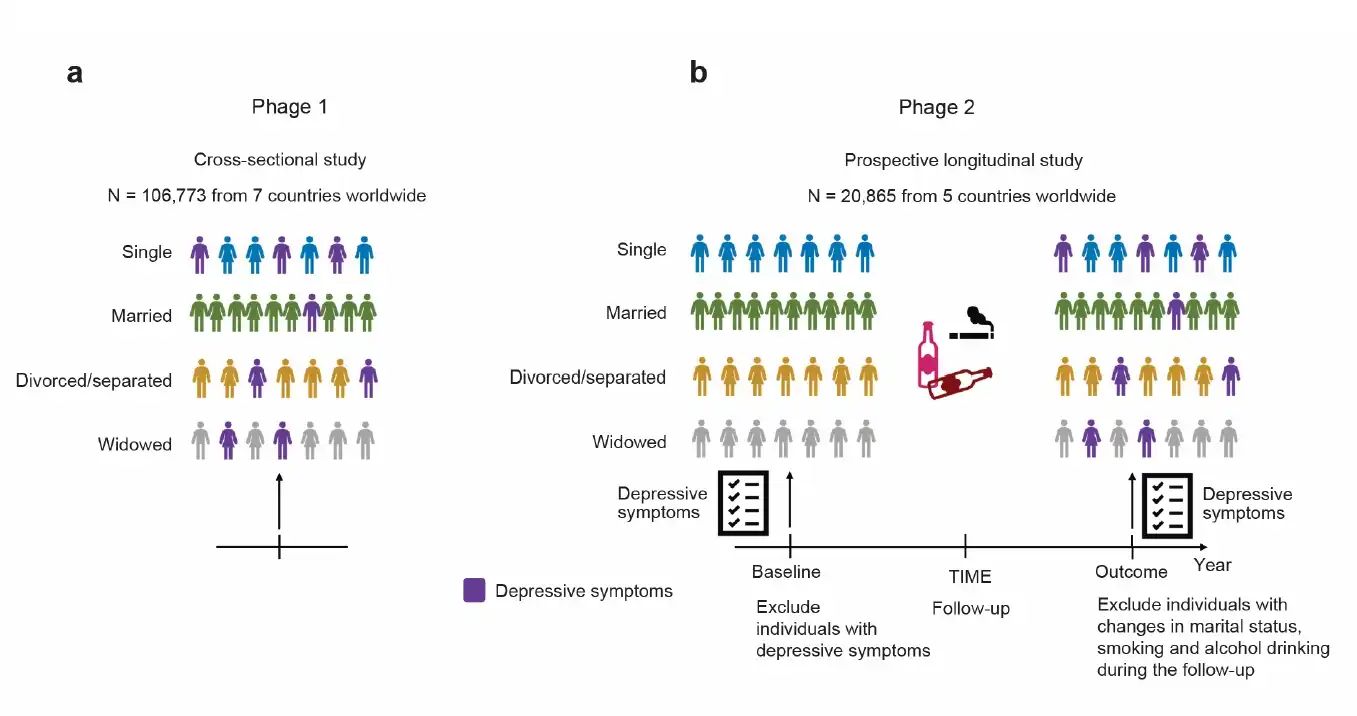
Depression represents a significant global public health challenge, and marital status has been recognized as a potential risk factor. However, previous investigations of this association have primarily focused on Western samples with substantial heterogeneity. Our study aimed to examine the association between marital status and depressive symptoms across countries with diverse cultural backgrounds using a large-scale, two-stage, cross-country analysis. We used nationally representative, de-identified individual-level data from seven countries, including the USA, the UK, Mexico, Ireland, Korea, China and Indonesia (106,556 cross-sectional and 20,865 longitudinal participants), representing approximately 541 million adults. The follow-up duration ranged from 4 to 18 years. Our analysis revealed that unmarried individuals had a higher risk of depressive symptoms than their married counterparts across all countries (pooled odds ratio, 1.86; 95% confidence interval (CI), 1.61–2.14). However, the magnitude of this risk was influenced by country, sex and education level, with greater risk in Western versus Eastern countries (β = 0.36; 95% CI, 0.16–0.56; P < 0.001), among males versus females (β = 0.25; 95% CI, 0.003–0.47; P = 0.047) and among those with higher versus lower educational attainment (β2 = 0.34; 95% CI, 0.11–0.56; P = 0.003). Furthermore, alcohol drinking causally mediated increased later depressive symptom risk among widowed, divorced/separated and single Chinese, Korean and Mexican participants (all P < 0.001). Similarly, smoking was as identified as a causal mediator among single individuals in China and Mexico, and the results remained unchanged in the bootstrap resampling validation and the sensitivity analyses. Our cross-country analysis suggests that unmarried individuals may be at greater risk of depression, and any efforts to mitigate this risk should consider the roles of cultural context, sex, educational attainment and substance use.


MetDIT: 一种人工智能技术的临床组学数据分析方案

Yuyang Sha (沙宇洋)

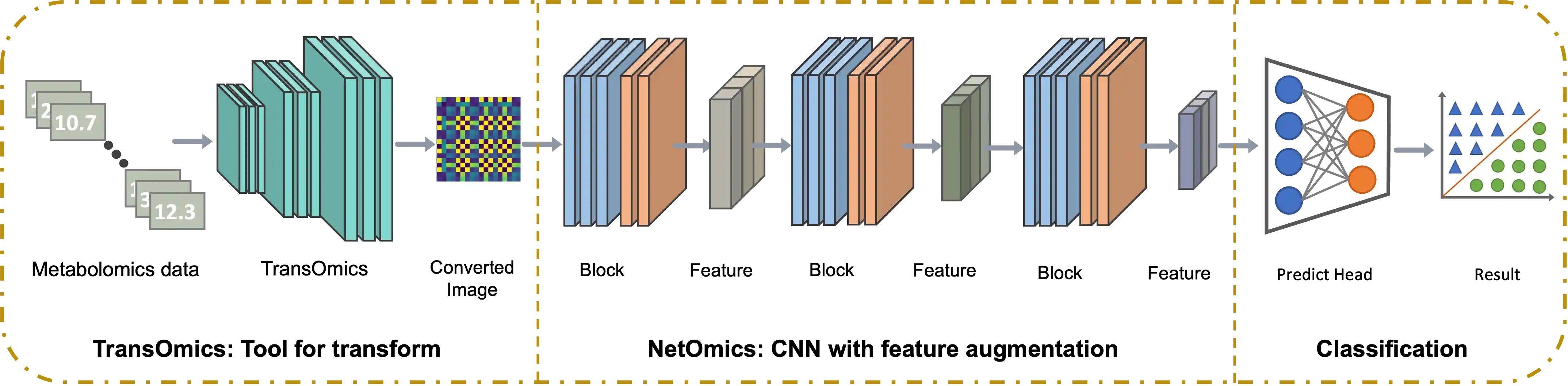
临床组学数据的精准分析在疾病诊断、药物发现等领域中具有非常重要的意义。 通常,临床组学数据具有纬度高、样本量小、特征关联性复杂等特点,传统的数据数据分析方法很能全面的对临床组学数据进行高效的分析和理解。 因此,本工作提出了一种基于人工智能的临床组学数据分析方案(MetDIT),借助卷积神经网络来对数据进行高效的分析。 MetDIT主要包含两个部分,分别是TransOmics和NetOmics;其中,TransOmics负责将一维的组学数据转换为二维的图像数据, 在转换过程中会保持序列与图像之间的一一对应关系;NetOmics通过构建高效神深度神经网络来对转换后的二维数据进行分析。 为了克服组学数据中样本量小、类别不平衡等难题,我们还设计了一种特征增强模块(FAM)和损失函数,从而进一步提升算法的性能。 为了探究方法的性能,我们选择了三个具有代表性的临床组学数据进行分析,结果显示本文所提出的方案在精度、稳定性、运行效率等方面具有极大的优势。


MRanalysis:一个用于综合性、多方法孟德尔随机化及相关 GWAS 后分析的综合在线平台

Abao Xing (邢阿宝)

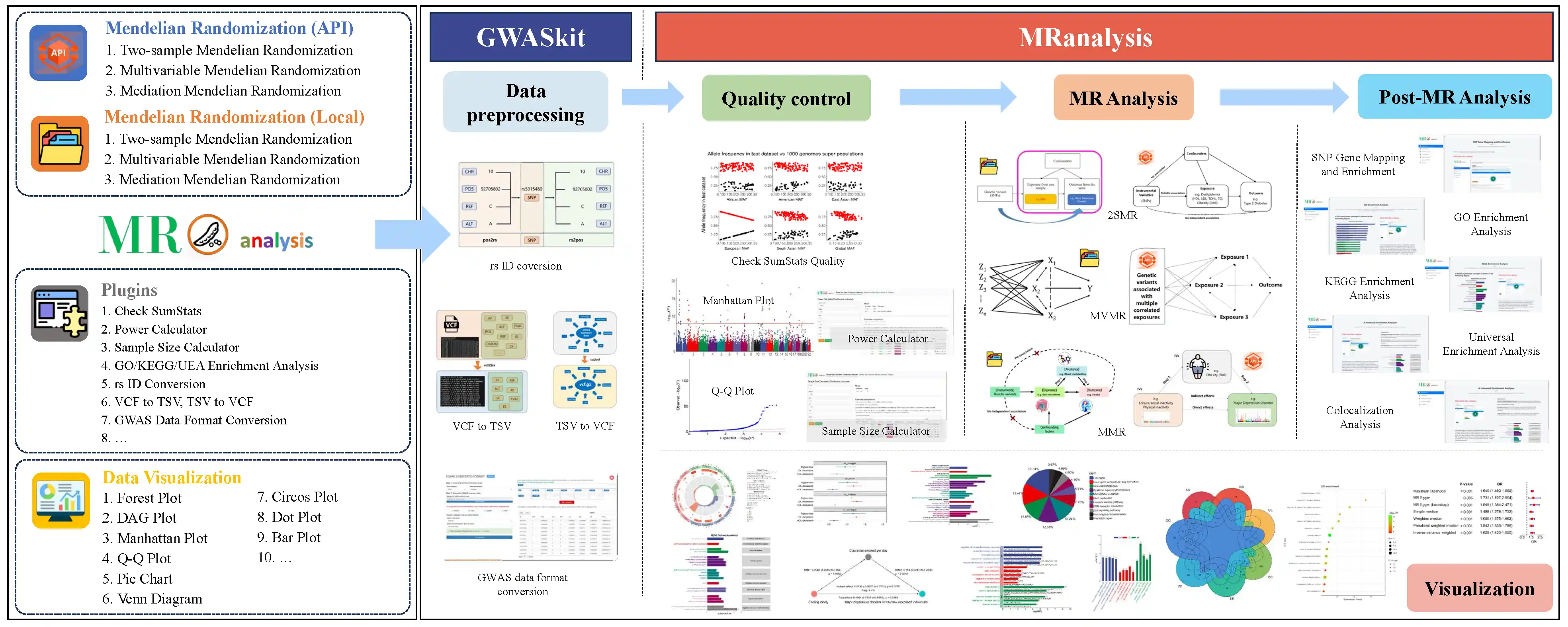
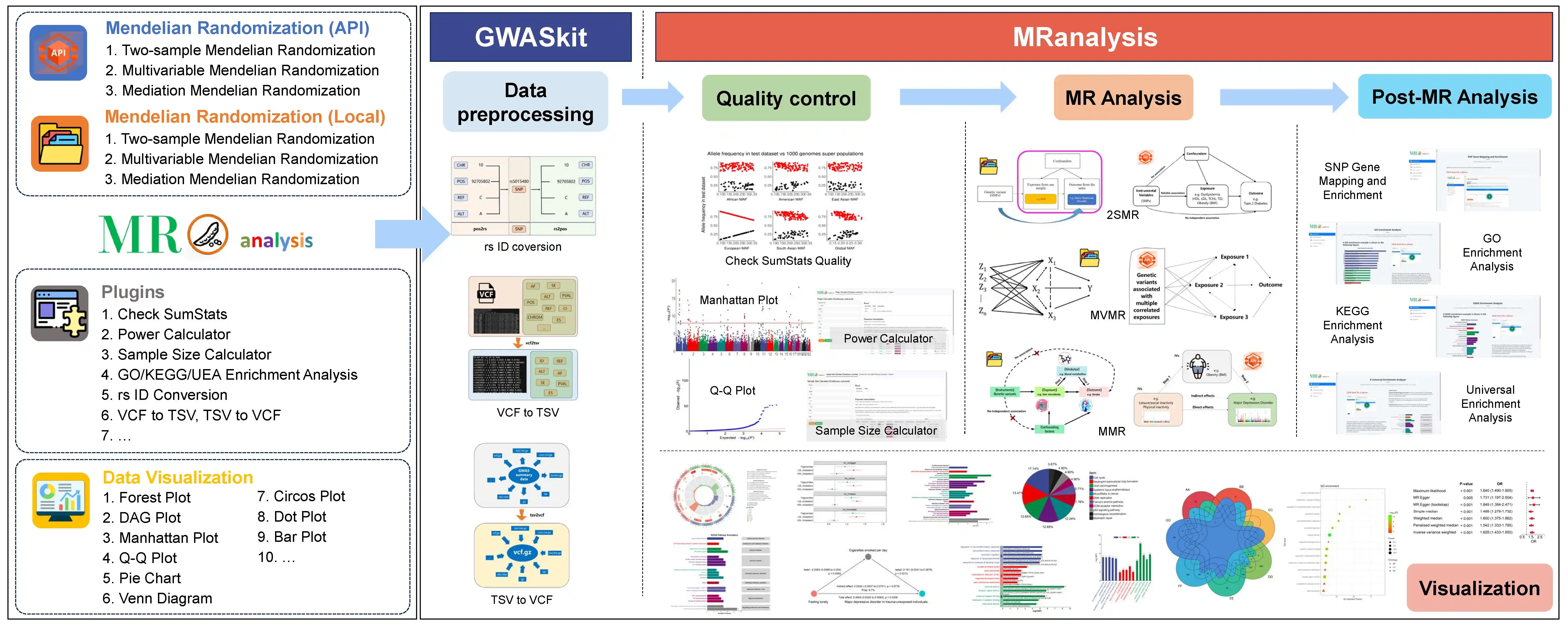
背景:孟德尔随机化(MR)是一种利用全基因组关联研究(GWAS)数据推断暴露与结果之间因果关系的强大流行病学方法。然而,由于数据格式不一致、缺乏标准化工作流程以及需要编程专业知识,其应用受到限制。为了解决这些挑战,我们开发了 MRanalysis(一个用户友好的、基于网络的综合 MR 分析平台)和 GWASkit(一个用于 GWAS 数据预处理的独立工具)。

结果:MRanalysis 为 MR 分析提供了一个全面的、无代码的工作流程,包括数据质量评估、功效(Power)估算、单核苷酸多态性(SNP)到基因的富集分析以及可视化。它通过直观的界面支持单变量、多变量和中介 MR 分析。GWASkit 促进了 GWAS 数据的快速预处理,如 rs ID 转换和格式标准化,其准确性和效率显著高于现有工具。案例研究证明了这两种工具在实际场景中的实用性和高效性。

结论:MRanalysis 和 GWASkit 降低了 MR 分析的门槛,使其更加易于访问、可靠和高效。通过普及 MR,这些工具可以加速遗传流行病学的发现,为公共卫生策略提供信息,并指导靶向临床干预措施的开发。MRanalysis 可在 https://mranalysis.cn 免费获取,GWASkit 可在 https://github.com/Li-OmicsLab-MPU/GWASkit 获取。它们共同代表了在理解基因、暴露和健康结果之间复杂关系方面的重大进步。

Li-OmicsLab    Li-OmicsLab    kefengl@mpu.edu.mo

Recent News

Happenings of the last few months
Centre for Artificial Intelligence Driven Drug Discovery (AIDD) at Macao Polytechnic University
Address: Rua de Luís Gonzaga Gomes, Macao, SR